When discussing Japanese architecture, Tadao Ando is impossible to overlook.
His buildings have had a profound impact on the architectural world.
In this article, we spotlight some of the most celebrated structures Ando has ever designed.
From 12 works that have earned high acclaim both in Japan and around the world, discover the defining characteristics and design ideas that make Tadao Ando’s architecture truly unique.
Architect Tadao Ando
There are many celebrated architects across the globe, but few have achieved the name recognition of Tadao Ando — a figure respected not only in Japan, but worldwide.
People around the world are captivated by the buildings Ando creates through sheer self-taught tenacity and innate talent.
His distinctive exposed concrete structures, for example, have drawn international attention, and in 1995 he received the Pritzker Architecture Prize — widely regarded as the Nobel Prize of architecture and the highest honor in the field.
>> Tadao Ando Architect & Associates
Characteristics of Tadao Ando’s Architecture

Every architect leaves their own fingerprint on their work, and Tadao Ando is no exception.
By actively embracing exposed concrete — a technique far from mainstream at the time — Ando has expressed a quiet beauty found in the rawness of the material itself.
Beyond that, each of his buildings features a carefully designed interplay of light and space.
In the Church of the Light, for instance, wind, water, light, and the earth are woven together as a single design concept, with each element rendered through a distinct treatment of light.
12 Tadao Ando Buildings in Japan
Over the course of his career, Tadao Ando has designed countless buildings both at home and abroad.
His designs span an extraordinary range of typologies, offering rich inspiration for anyone who wants to learn more about architecture.
Below, we’ve curated 12 of his most notable works in Japan.
His Debut Work: “Row House in Sumiyoshi” (Azuma House)
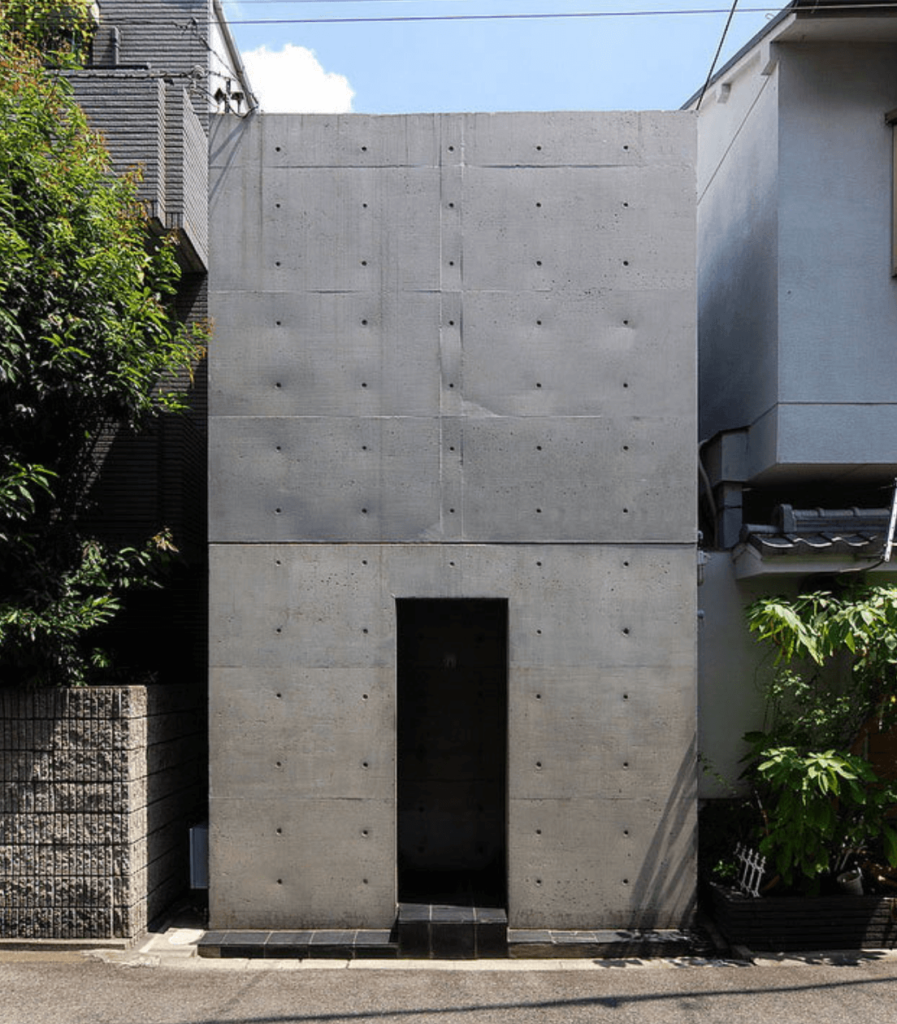
The first building we introduce is the “Row House in Sumiyoshi,” located in Sumiyoshi Ward, Osaka. (1976 · Osaka)
Completed in 1976, the Row House in Sumiyoshi is Tadao Ando’s debut work.
The middle unit of a traditional wooden three-unit row house was torn down and rebuilt as a compact reinforced concrete residence.
The result strikes a balance between introducing something arrestingly new into the historic streetscape while still harmonizing with it.
At the time, the design — which required residents to pass through an open courtyard to move between rooms — attracted significant criticism.
Yet its bold and radical vision ultimately earned widespread recognition, winning the Architectural Institute of Japan Award, a place on the DOCOMOMO Japan list, and selection as part of Japan’s Modern Movement in architecture.
Hours: Open 24 hours
Housing Units Clinging to a Steep Hillside: “Rokko Housing”
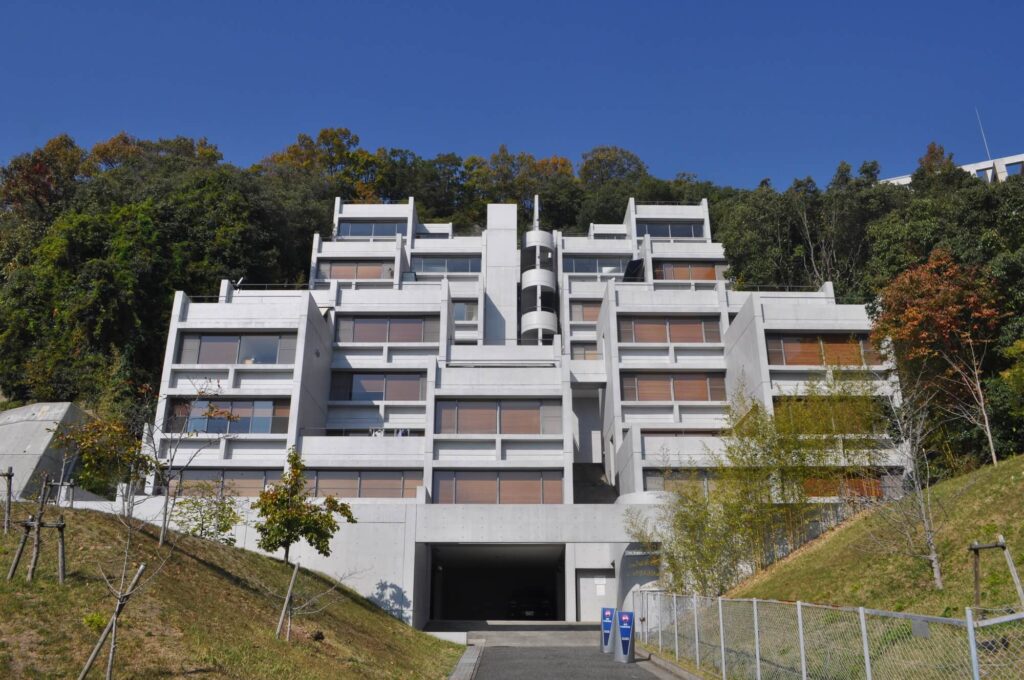
Next is “Rokko Housing,” located in Hyogo Prefecture. (1983 · Hyogo)
One of Ando’s signature collective housing projects, the complex appears almost grafted onto the steep slopes of Mount Rokko.
The grid-like units are arranged in an orderly pattern and connected through shared spaces such as small plazas and staircases, while courtyards and terraces open up views of the natural surroundings.
Another defining feature is the stepped massing of units that set back progressively as they rise.
Hours: Interior visits not available (private residence)
Feel the Breeze in a Stripped-Back Space: “Church on the Water” — Wind Chapel
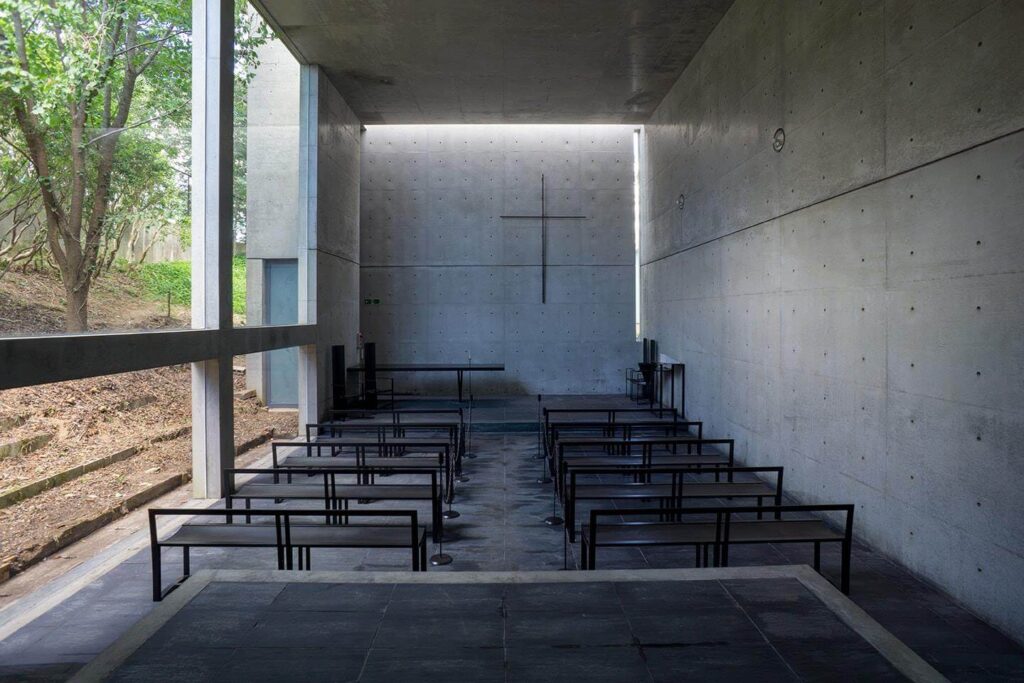
Next is the “Wind Chapel” (Chapel on Mount Rokko), built in 1986 in Hyogo Prefecture. (1986 · Hyogo)
One of Ando’s most beloved works, it draws architects and design enthusiasts from all over.
The approach corridor leading to the small chapel is finished in raw exposed concrete — a space that feels unmistakably Ando.
Additional details — such as pews laid on their sides as an artistic statement and a floor clad exclusively in black granite — reflect his meticulous attention to craft.
Hours: 10:00–17:00
https://www.kazenokyoukai.com/
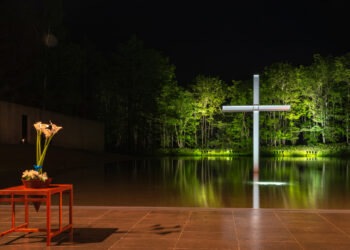
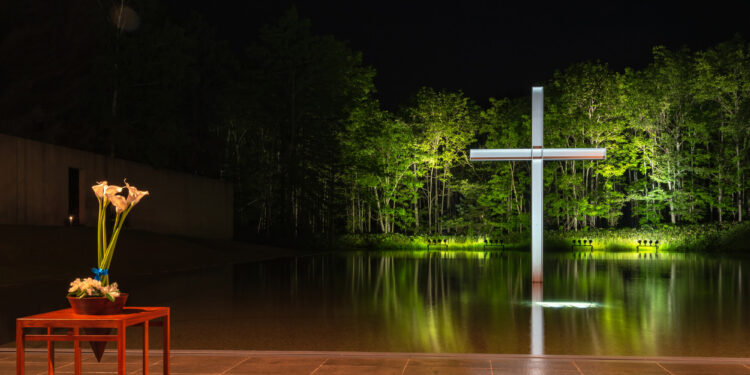
A Cross and the Natural World in Perfect Harmony: “Chapel on the Water”
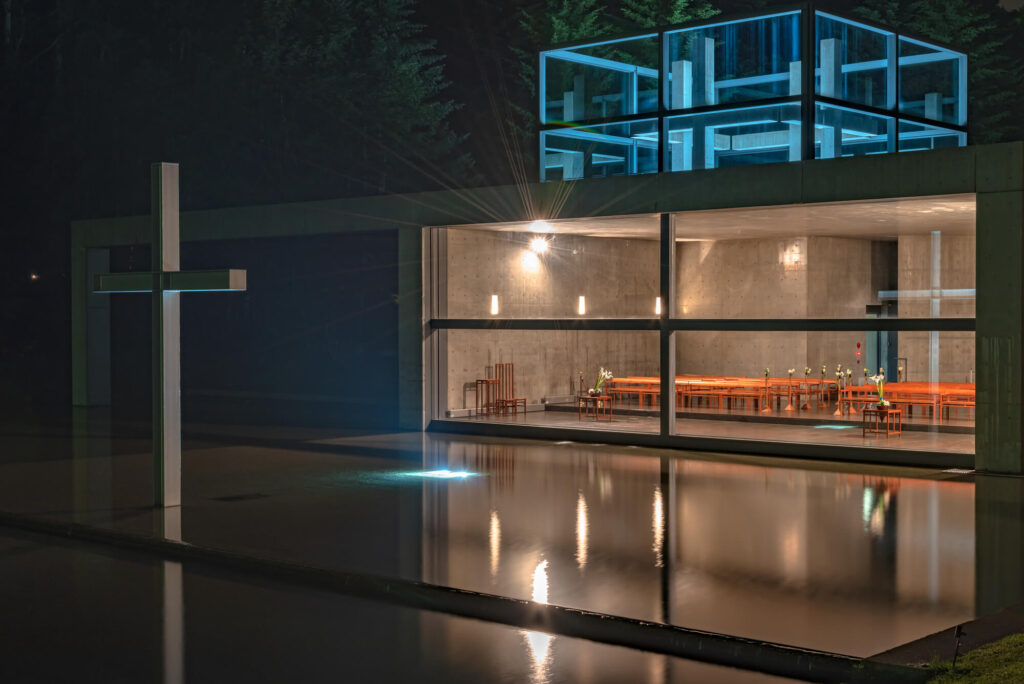
Next is the “Chapel on the Water,” built in 1988 in Hokkaido. (1988 · Hokkaido)
The Chapel on the Water is the second installment in Ando’s Church trilogy, completed two years after the Wind Chapel.
It was designed around the question of how humanity relates to the natural element of water.
Opening the doors set into the L-shaped walls that wrap around the chapel reveals a towering cross standing in the reflecting pool, the chapel facing it — a space born from every
detail Ando painstakingly considered.
Hours: 20:30–21:30 (closed for maintenance in April and November)
https://tomamu-wedding.com/
A Mystical Cross of Light: “Church of the Light”
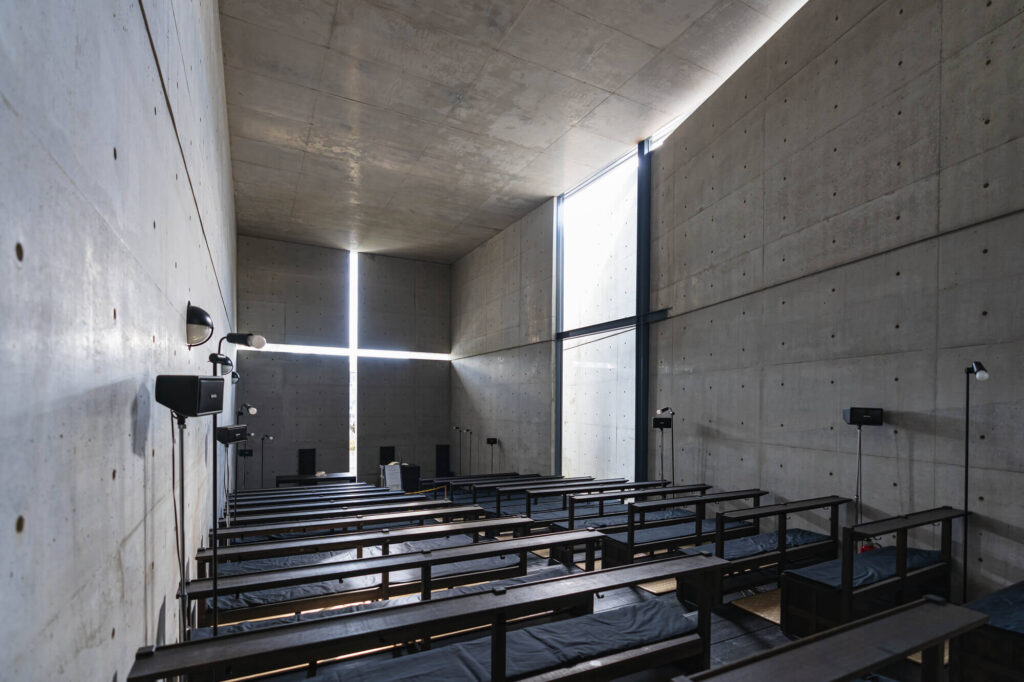
Next is the “Church of the Light,” the final work in Ando’s Church trilogy. (1989 · Osaka)
Located in Osaka Prefecture, the Church of the Light was completed in 1989, the year after the Chapel on the Water.
While the other two works in the trilogy also serve as wedding venues and hotels, the Church of the Light — comprising a chapel, a minister’s residence, and a Sunday school hall — functions exclusively as a Protestant Christian religious facility, used for services, worship, and funerals.
The church is defined by its singular world, but the chapel is especially striking: a rectangular room with a 1:3 ratio, through whose walls a cross-shaped opening cuts, transforming incoming light into something altogether more transcendent.
The floor, painted black, creates a sharp, dramatic contrast between light and shadow.
Hours: 13:30–16:00 (reservation required)
https://ibaraki-kasugaoka-church.jp/j-top.html
A View Opens onto the Seto Inland Sea: “Benesse House”
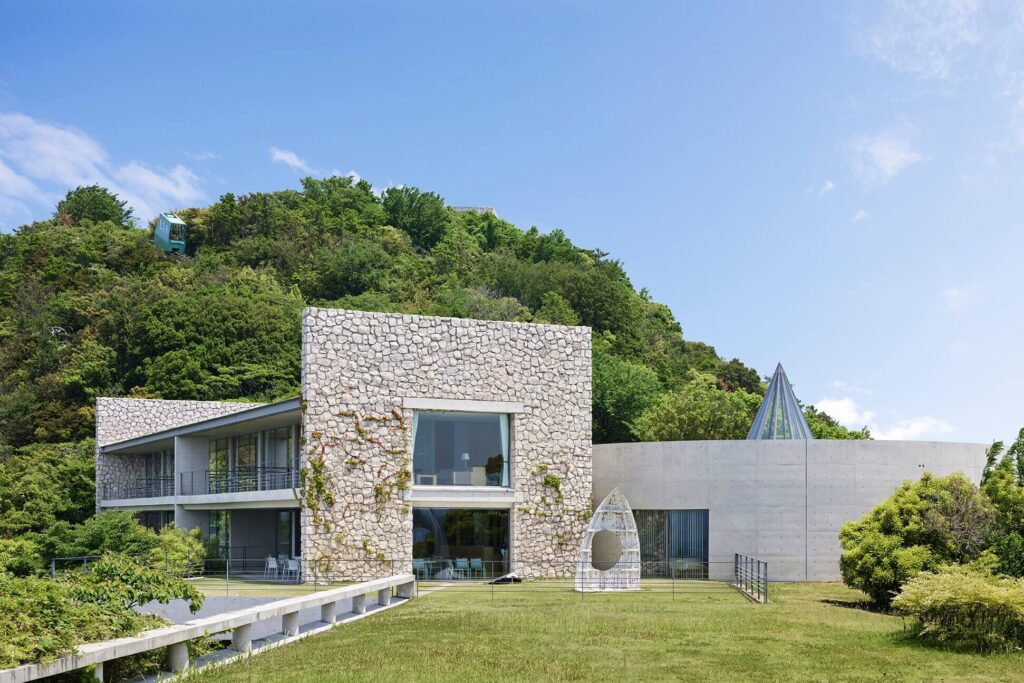
Next is “Benesse House,” built in 1992 on Naoshima Island, Kagawa Prefecture. (1992 · Kagawa)
Benesse House was conceived under the concept of “the coexistence of nature, architecture, and art,” integrating a museum and hotel into a single structure.
Perched on a hill overlooking the Seto Inland Sea, the building offers sweeping panoramic views while large openings and bold ramps connecting each floor bring the surrounding landscape directly inside.
Hours: 8:00–21:00 (last admission 20:00)
https://benesse-artsite.jp/stay/
Restoring the Green Earth: “Awaji Yumebutai”

Next is “Awaji Yumebutai,” completed in 1999. (1999 · Hyogo)
Set amid the lush landscape of Hyogo Prefecture, the complex was built to rehabilitate land that had been stripped of its natural terrain by excavation.
On clear days, sunlight floods the grounds, and the contrast of verdant landscape against open sky creates a luminous, shimmering world.
Hours: Varies by facility
https://www.yumebutai.co.jp/
A Symbol of Recovery: “Hyogo Prefectural Museum of Art”
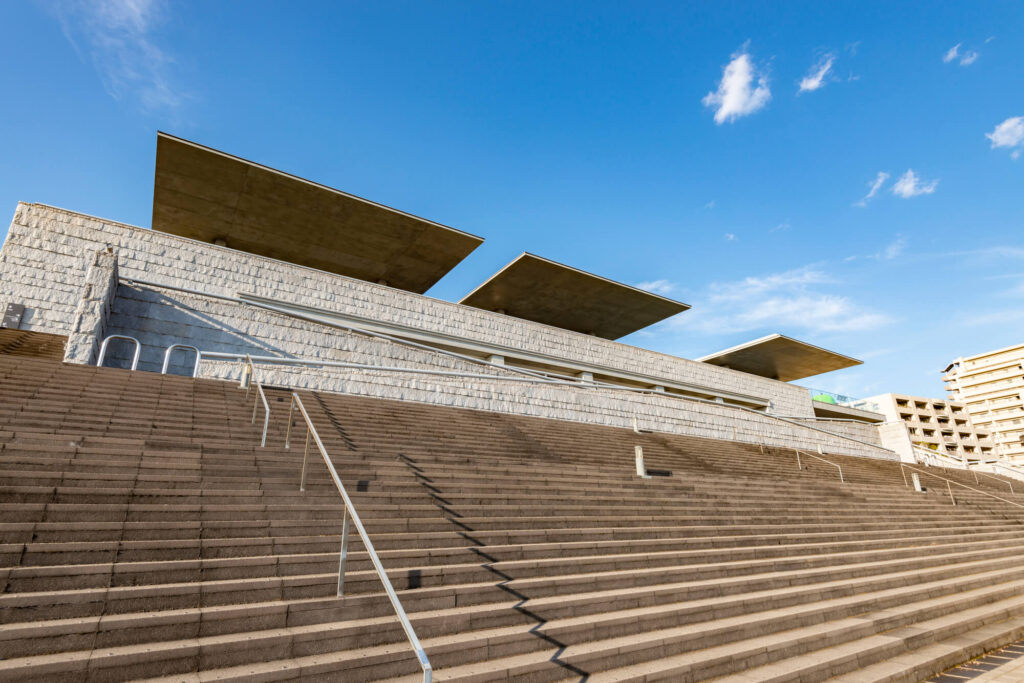
Next is the “Hyogo Prefectural Museum of Art,” located in Hyogo Prefecture. (2001 · Hyogo)
Opened in 2001 as a symbol of recovery from the Great Hanshin-Awaji Earthquake, the building embodies Ando’s vision of the fusion of fine art and the arts.
The entrance hall carries a calm, restrained atmosphere, while the gallery spaces are bathed in natural light through expansive glass windows — a sharp interplay of shadow and brightness unfolds throughout the building.
Because natural light shifts with the seasons, the museum presents a different face throughout the year.
Hours: 10:00–18:00 (last admission 17:30)
Closed: Mondays
https://www.artm.pref.hyogo.jp/
Natural Light Flooding Underground: “Chichu Art Museum”
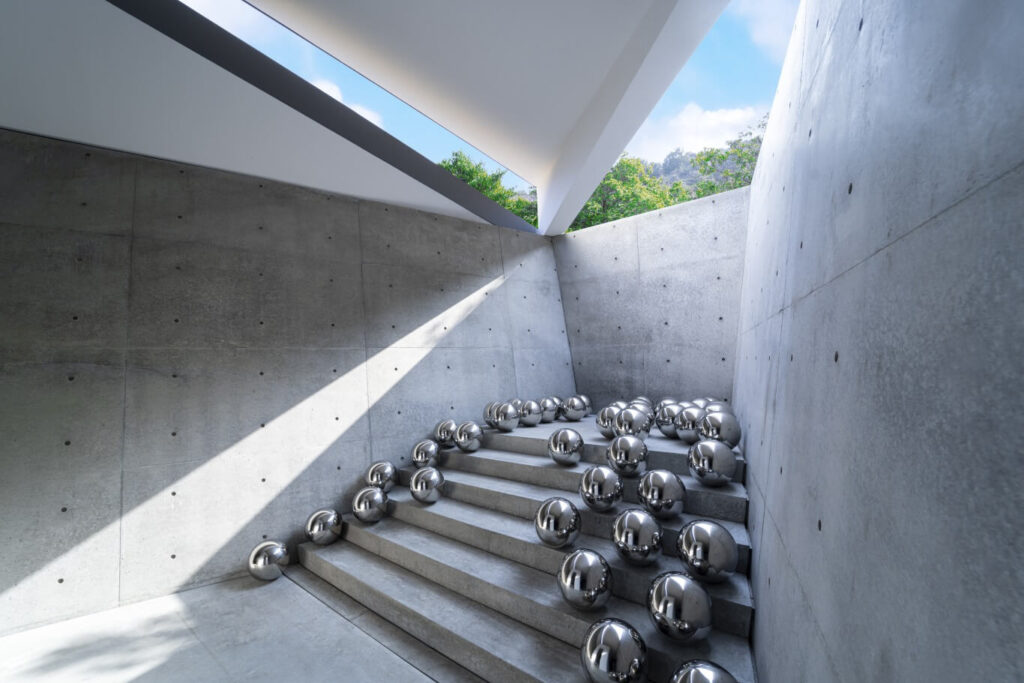
Next is the “Chichu Art Museum,” built in 2004 in Kagawa Prefecture. (2004 · Kagawa)
Conceived around the idea of “a place to reflect on the relationship between nature and humanity,” the majority of the building is buried underground to preserve the pristine landscape of the Seto Inland Sea.
Even below ground, natural light pours in — filling the interior with a brightness that changes with the seasons — a detail that speaks volumes about Ando’s uncompromising design philosophy.
Hours:
· March 1 – September 30: 10:00–18:00 (last admission 17:00)
· October 1 – Last day of February: 10:00–17:00 (last admission 16:00)
Closed: Mondays
https://benesse-artsite.jp/art/chichu.html
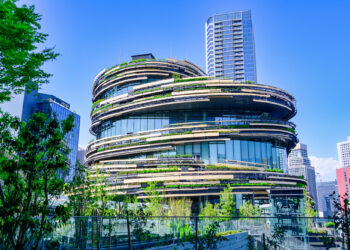
A 700-Meter Spiral Ramp Following Omotesando’s Slope: “Omotesando Hills”

Next is “Omotesando Hills,” built in 2006 in Tokyo. (2006 · Tokyo)
Now one of the defining landmarks of Omotesando, this complex achieves an inventive design while remaining in harmony with the avenue’s storied streetscape.
Though the building is rooted in concrete, rooftop greenery was incorporated to create a seamless visual dialogue with the zelkova tree-lined boulevard below.
The building’s most iconic feature is the 700-meter-long spiral ramp that follows the natural gradient of Omotesando.
Hours:
Shops
· Monday–Saturday: 11:00–21:00
· Sunday: 11:00–20:00
Restaurants
· Monday–Saturday: 11:00–23:00
· Sunday: 11:00–22:00
https://www.omotesandohills.com/
Inspired by a Single Sheet of Fabric: “21_21 DESIGN SIGHT”
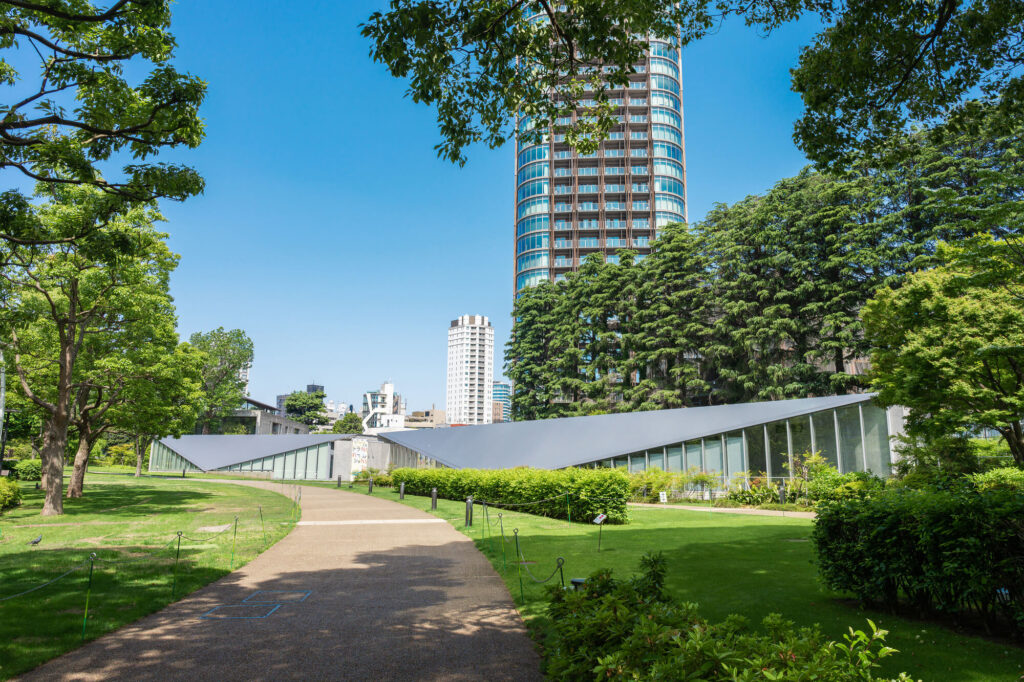
Next is “21_21 DESIGN SIGHT,” built in 2007 in Tokyo. (2007 · Tokyo)
Located within the Midtown Garden of Tokyo Midtown, the gallery keeps its exterior deliberately understated to complement its surroundings, while the interior opens into a liberating sense of space.
The low-rise building — one floor above ground, one below — is immediately recognizable for its striking triangular steel roof.
The design draws on fashion designer Issey Miyake’s concept of “a piece of cloth”: the roof itself is formed from a single folded steel plate, echoing that founding idea.
Hours:
· Weekdays: 11:00–17:00 (last admission 16:30)
· Weekends & holidays: 11:00–18:00 (last admission 17:30)
https://www.2121designsight.jp/
A Library for Children, Funded by the Architect Himself: “Kodomo no Mori — Nakanoshima”

The final work in our Japan selection is “Kodomo no Hon no Mori — Nakanoshima” (Children’s Book Forest), built in 2020 in Osaka. (2020 · Osaka)
Housing a rich collection of more than 18,000 books, this space is designed for children to encounter and explore the world of literature.
The building follows a gentle arc along the Dojima River, enhancing the waterfront scenery of Osaka — a city long celebrated as the “City of Water.”
Hours: 9:30–17:00
Closed: Mondays
https://kodomohonnomori.osaka/
3 Tadao Ando Buildings Abroad
Tadao Ando’s reach extends far beyond Japan — he has designed major works across the globe.
Here are three international buildings that exemplify his vision.
Concrete, Glass, and Water in Perfect Balance: “Modern Art Museum of Fort Worth”
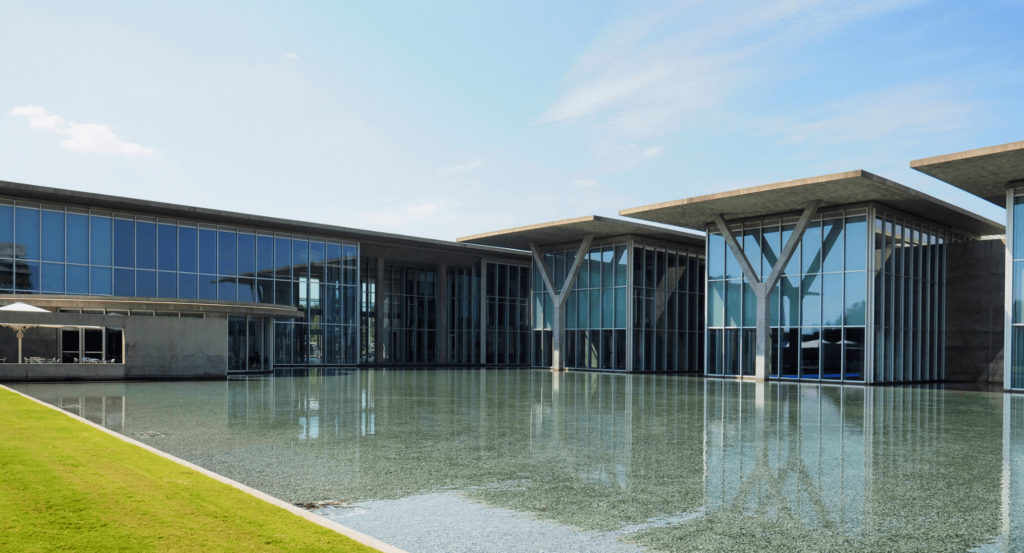
First is the “Modern Art Museum of Fort Worth,” built in 2002 in the United States. (2002 · USA)
Designed with a strong emphasis on horizontal flow and a visual connection with the outdoors, the museum’s glass walls allow visitors to take in the surrounding reflecting ponds while viewing the exhibitions inside.
The expansive glazing gives both the exterior and interior an extraordinary sense of openness.
Hours:
· Tue–Thu: 10:00–17:00
· Fri: 10:00–20:00
· Sat–Sun: 10:00–17:00
https://www.themodern.org/
A Museum That Spans an Entire 20,000-Tsubo Estate: “Museum SAN”
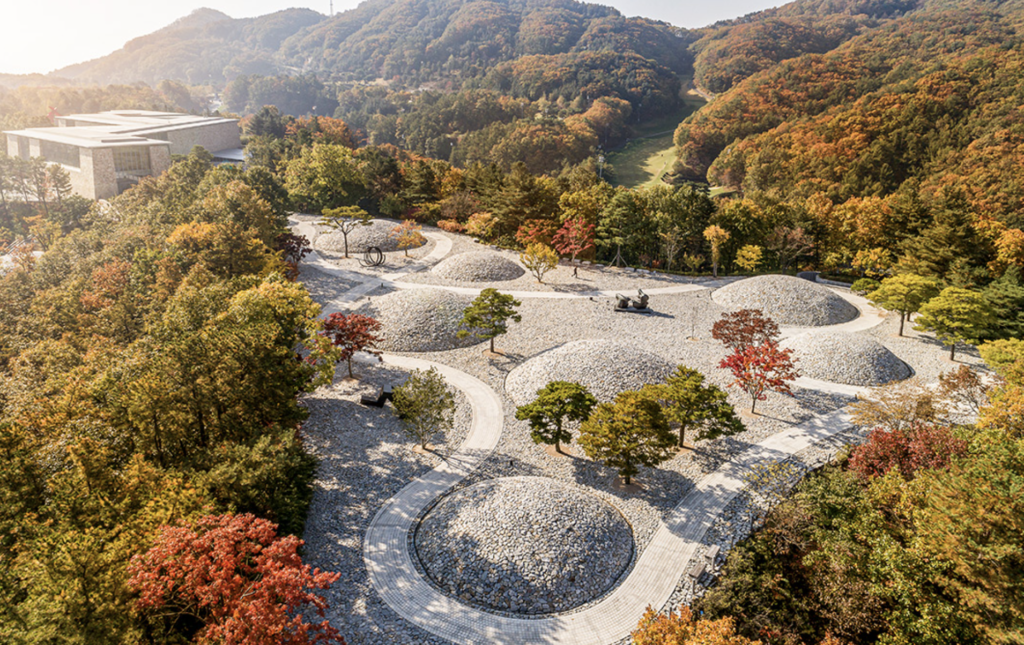
Next is “Museum SAN,” built in 2012 in South Korea. (2012 · South Korea)
Following visits by popular K-pop idols, the museum has become increasingly known among younger audiences throughout Korea.
Perched at an elevation of 275 meters and enveloped in natural surroundings, the complex is defined by a profound quietude — the interior, flooded with natural light through broad windows, enhances that sense of serenity.
Ando himself has said he “wanted the entire site to be the museum,” and indeed the grounds beyond the building — lush with greenery and ancient relics — offer a complete immersion in nature.
Hours: 10:30–18:00
http://www.museumsan.org/eng/
Hollowed Cylinders as Windows to the World: “Poly Grand Theatre Shanghai”
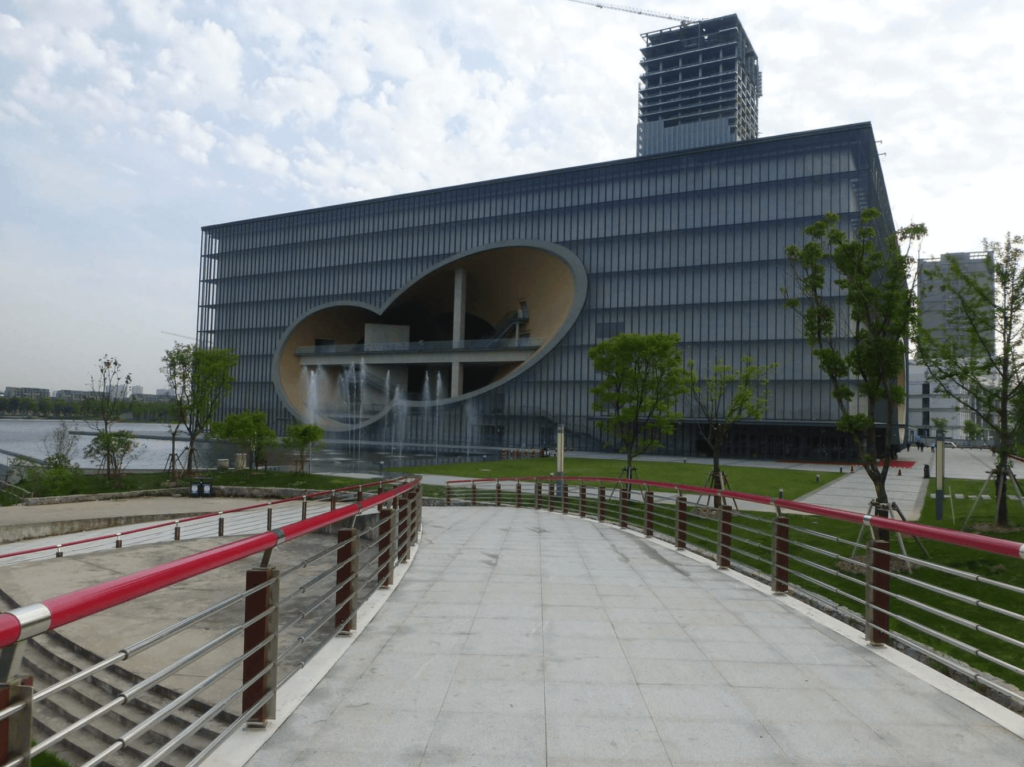
The final work is the “Poly Grand Theatre,” built in 2016 in China. (2016 · China)
The building is recognized as one of three major Ando projects currently defining Shanghai’s architectural landscape.
Exposed concrete is encased in glass, creating a double-layered cubic form that is simultaneously minimal and deeply distinctive.
Multiple hollow cylinders serve as an unconventional window system — yet another expression of the architectural beauty that only Tadao Ando could conceive.
Experience the Architecture of Japan’s Most Celebrated Builder
Tadao Ando continues to design to this day.
His current project — the Next Innovation Museum, for which Ando serves as design supervisor as part of the Umekita 2nd District Development Project — is generating significant excitement both in Japan and around the world.
The question on everyone’s lips: how will this urban park be reborn under Ando’s hand?
It is no exaggeration to call Tadao Ando the most internationally recognized Japanese architect alive.
If architecture and construction intrigue you, there is no better place to begin than with the buildings Tadao Ando has left on the world.